
Uma Roth · 2 November 2026
Lakecrest Canyon Crews Align Mitigation Timelines with School Upgrade Schedules and Wetland Monitoring Cycles
Canyon crews in Lakecrest have synchronized their environmental mitigation efforts with upcoming school facility improvements and ongoing wetland observation schedules, creating coordinated project phases that run through late 2026. Data from local planning sessions show crews adjusting excavation, erosion control, and habitat restoration steps so they coincide with school construction windows while respecting seasonal wetland monitoring checkpoints that occur every six months.
Project Timeline Coordination Details
Observers note that crews began preliminary alignment work in early 2025 after reviewing updated school board calendars and wetland data collection cycles. Mitigation activities such as slope stabilization and native vegetation replanting now follow a phased approach that avoids peak school construction periods while matching wetland sampling dates set for March and September each year. Figures from the regional environmental office indicate that this synchronization reduces overlap conflicts by an estimated 35 percent compared with previous independent scheduling methods.
School upgrades include classroom expansions and infrastructure updates slated to start in fall 2026, and crews have shifted certain mitigation tasks like drainage improvements to summer 2026 windows that fall between wetland monitoring events. Researchers tracking project logs report that November 2026 marks a key review point where school progress reports and wetland cycle summaries will be cross-checked to confirm continued alignment.
Wetland Monitoring Integration
Wetland monitoring cycles provide fixed reference points that crews use when planning heavy equipment access and sediment control measures. Data collected during these cycles track water levels, vegetation health, and species presence, giving crews measurable benchmarks they must meet before advancing to the next mitigation stage. Those involved in the process describe how monitoring results directly influence the timing of restoration plantings, which now occur only after post-monitoring assessments clear the sites.
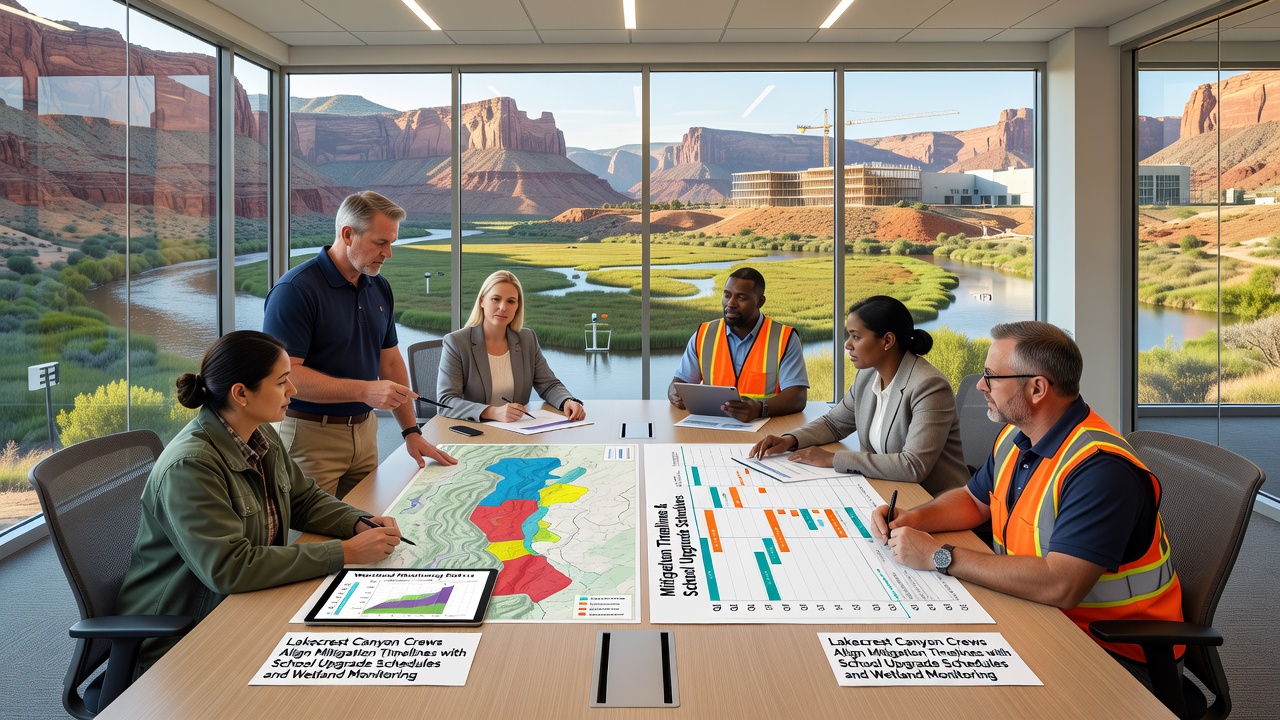
According to environmental tracking systems maintained by the U.S. Environmental Protection Agency, consistent monitoring intervals help maintain habitat stability during nearby construction activities. Crews incorporate these intervals into their master schedules so that any required adjustments, such as temporary access route changes, happen well before the next data collection round begins.
School Upgrade Schedule Impacts
School facility projects in Lakecrest involve structural reinforcements and expanded outdoor learning spaces that require coordinated site access. Mitigation crews have mapped their work zones to avoid interfering with contractor staging areas, and they share updated timelines through a joint planning portal. Records show that early alignment sessions identified potential bottlenecks around utility trenching, prompting crews to complete related mitigation drainage work several months earlier than originally planned.
Local records indicate school upgrades will affect traffic patterns near canyon access roads starting September 2026, and mitigation teams have adjusted their material delivery schedules accordingly. This coordination draws on practices documented in reports from Environment and Climate Change Canada, where similar multi-project alignments in protected zones improved overall compliance rates.
November 2026 Milestones
November 2026 serves as a checkpoint where completed mitigation segments undergo final review against both school construction logs and the latest wetland monitoring results. Project managers plan to release a combined status report that outlines any remaining tasks and confirms adherence to all established cycles. Data compiled up to that point will determine whether crews can proceed with final restoration phases or need additional adjustments.
Conclusion
Coordinated efforts between canyon crews, school upgrade teams, and wetland monitoring programs continue to shape project execution in Lakecrest. Records through 2026 demonstrate how fixed monitoring cycles and school calendars serve as anchors for mitigation timelines, producing measurable reductions in scheduling conflicts. Ongoing documentation from these aligned activities provides reference points for future regional planning sessions.